The Great Religious and Social Awakener
- By J.R.Subba
In the study of Limboo language and Literature, one often comes across two famous names known as Sirijunga Hang and Teyongshi Sirijunga Singthebe. The former Sirijunga Hang was the King of the Limboos who lived during the 9th Century A.D. and ruled the then Limbuwan country from for 35 years (882 to 925 A.D.) (present Nepal). The latter Teyongshi Sirijunga Singthebe, claimed by himself to be the reincarnate of the former who was born in the Same Thebe clan at Sinam, Yangwarok Thum in Limbuwan, in the year 1704 A.D. Popular belief is that he was not an incarnate Phedangma initiated by any incarnate Limboo religious priest.
Sirijunga Hang (882-925 A.D.) son of Galijanga Hang of Ma Pangbhe, Imbiri Yangthangwa, Tamberkhola became powerful and brought all the other Limboo provinces under his control during the last quarter on the ninth century A.D. and he ruled Limbuwan for about 35 years (Chemjong, I.S. 1948; Shrestha, S.K. 1995). During that time, Limbuwana country was bounded by the border of Tibet (China) in the North, Indian Plains in the south, Tusroti-Umroti (Brahamputra) in the East (as revealed in Pungwachangma Mundhum), and Arun River in the West.
King Sirijunga after consolidation of his kingdom took keen interest in educating his subjects, who were all illiterate and uncivilized. He was a great visionary who wanted to educate all his subjects and bring about literary awakening. He said, “Know how to read and write” are essential for education. For reading and writing we need a script, and script represents a language and tribe/race. Hence, following the foot steps of learned Tibet scholars, he devised and developed the Limboo script from the Brahmi script of Gupta period (4th to 8th century A.D.). The script fulfils the requirement in terms of words, sound and accent. He was successful in codifying a totally different script, which could integrate all the grammatical and literary aspects of limboo language. The script was believed to have been consisted of long sounding letters similar to the Tibetan alphabets like “ka”, “kha”, “ta”, “pa”, etc. In order to make these letters short sounded; one had to add a vowel symbol. This indicates that the script has been devised same as that of Tibet script which was also devised from the same Gupta’s Brahami Script of 4th to 8th century A.D. (Subba, P.S.1997). Now, in his honour the script has been named as “Sirijunga Script”. He continued educating his subjects about reading and writing of Limboo script devised by him. Further, following his learned Yehang predecessors – Kandenhang (?), Ubahang (849-849), and Mabohang (865-882), he taught the teachings of Yuma religion. He started teaching of inherent faith of Yuma religion.
The King Sirijunga’s script was consisted of only 21 big letters and 11 small letters (half-sounding letters) then. However, we do not have any manuscript or document in record to observe or compare the original script of Sirijunga Hang with that of Teyongshi Sirijunga’s script. Due to this reason, many linguists are of the opinion that Teyongshi Sirijunga was the man who had invented the Limboo script during the early half of Eighteenth century. Most of the script from the Campbell and Hodgson’s papers photocopy obtained from India Office Library London is believe to be of the period of Teyongshi Sirijunga (Batsgopal, 1997).
After Sirijunga Hang’s demise, his successors Yongjunga and others could not carry forward the language and literary work he made so popular in Limbuwan. As a result the Sirijunga script disappeared or remained disused. However, the inherent Limboo dialect being spoken, Yuma religion beliefs system, culture and tradition conceived and adopted by the Limboo people since time immemorial continued through a well established Phedangma priest system, Yehang system, Tumyanghang system. The oral Mundhum tradition which was rooted very deep in the Limboo society continued unhampered (Subba, J.R.1999, 2004). After the demise of this great King, the limboo community started disintegrating and started loosing its glory. The script devised by Sirijunga Hang was remained disused.
During the early 15th century, the Thebe clan of Ma Pangphe, Tamerkhola, the clan that King Sirijunga belongs, migrated to Yangrup Thum Sinam. R.B.Yakthugchum has traced out the migrated generations of Sirijunga Hang in his book as Himahang to Porahang to Surahang to Samjikhang. Samjikhang had two sons Yodowahang Thuprukthebe (elder) and Isirihang Singthebe. Again Isirihang had two sons namely Sivoko Singthebe and Teyongshi Sirijunga Singthebe. The generations of Sivoko Singthebe and Yodowahang Thuprukthebe could be traced out up to 9 generations at Yangrup Thum Sinam today (Yakthungchum, R.B.1998).
Thus, a great soul of 18th Century Teyongshi Sirijunga Singthebe (1704-1741) son of Isirihang Singthebe was born on the full moon day of Mangshir Purnima in 1704 A.D. (1760 B.S.) at Yangrup Thum Sinam, Limbuwan (present Nepal). When he was an adolescent boy, he said;
“I am the incarnation of King Sirijunga and I have come to rediscover the disappeared Limboo script of Sirijunga Hang and propagate Yuma religion Mundhums to make popular amongst the Limboo Community”
His parents thought that he was the incarnation of King Sirijunga of 9th century. Since then he was known as Teyongshi Sirijunga Singthebe.
Rebirth and reincarnation are the common belief system in the Limboo community. Rebirth is mainly to repeat the Karmic cycle on earth till the individual attains or qualifies for temporary release to Sangram Pedang Den (there is no permanent release or liberation from life and death in Yumaism). This takes place through the womb/matrix. Reincarnation is through life possession to the adolescent boys and girls, and is a must to become a Phedangma. Phedangma is a general term used for all types of Limboo shaman priests. Further, reincarnation is affiliated either patrilineal or matrilineal. Incarnation of Sirijunga Hang of 9th century to Sirijunga Singthebe is believed to be a patrilineal affiliation. All the Limboo priests such as MuhikkumOngshi, PhejiriPhedangma, Sambokko Samba, YebokkoYeba and Yebokko Yema are reincarnate Limboo priests. In Limboo language Teyongshi means reincarnation and thus, Sirijunga Singthebe was known as Teyongshi Sirijunga Singthebe (Subba, J.R.1998, 2004). Teyongshi Sirijunga used to be happy at the sweetness, humble tones and beauty of the Limboo language. In Limboo language is a verb-based (Pronominalized)language inherited by all the mongoloid human race inclusive of Native Americans. In this language each word consists of two parts. The first parts tell us its utility character and the second part tells its substance. For instance in Limboo the earth is known as “Iksa-Khambek” – “Iksa” means moving around and “Khambek” means soil or earth. Similarly, sky is known as “Torong-Tangsang” – “Torong” means like a bridge while “Tangsang” means spreading sky. At the same time he was very sad when he knew that the Limboo people were adopting other languages, culture, tradition and religion due to their ignorance of their own script, culture, tradition, Yuma religion and Mundhums. However, he was optimistic and used to say that if the Limboo script, language and literature, culture, tradition, Mundhum literature and Yuma religion could be developed, propagated and made popular amongst the Limboos, the identity and future of the community could be protected and made civilized (Subba, B.B. 2002).
The behaviour of the average Limboo citizen of Limbuwan, Sikkim and other parts of the world was influenced by years of inherent tradition and custom of Yumareligion made popular by extensive propagation of Ubahang, Mabohang, Sirijungahang, and Yongjangahangg during the latter half of the 9th century to the early 10th century. But many of these traditions and customs that governed people’s lives were being ignored because of more individualism developed during the period of latter 10th century to 17th century, 900 years or so. The Yuma religion being followed by the Limboo community teetered on the brink of self-destruction. The individualism so developed was as a prelude to social anarchy. Keeping these points in mind Teyongshi Sirijunga searched out the Limboo scripts devised by his forefather King Sirijunga of 9th century, placed before the Limboo people. He revived reading and writing of limboo language and Mundhum literature in Sirijunga script, and started propagation of Yuma religion in Limbuwan. Custom and tradition was the “mortar” that kept society together and the “deliberate tradition” social system that has been propagated by the three devoted Kings of Limbuwan, was rediscovered and rebuilt by Teyongshi Sirijunga. This appealed to the people by using existing behaviour established by precedent custom and tradition. Teyongshi Sirijunga used the Yuma Samyo teachings, morals, values and ideals of the Limboo people to continue the inherent belief system that would allow the people to behave responsible and still retain the essence of Limboo’s history and cultural identity.
When the Campbell and Hodgson’s papers photocopy were observed, “Sirijunga script” consisted of one vowel-carrier, 20 big consonant letters, 8 small half-sounding consonants, three Sub-joint or conjoint full sounding consonant letters and three phonetic symbols to begin with. The papers are the only oldest manuscripts or documents of Sirijunga script available with us for reference today. When the papers are examined in detail, some of the big volumes consisted of writing of Yuma religion Mundhums. In some of the text in each page, half has been written Yuma Samyo Mundhums in Sirijunga script, which has been tried to translate into Nepali in Deo-nagari script on the other half. Thus the Teyongshi Sirijunga’s script basically consisted of the followings:
a) Vowels:
^ a i u e ai o E
b) Vowel signs:
^ i u e ai o E
c) Big letters (20):
/ka/, /kha/, /na/, /ca/,
/cha/, /ja/, /ta/, /tha/,
/na/, /pa/, /pha/, /ma/,
/ya/, /ra/, /la/, /wa/,
/sha/, /sa/, /ha/, /loo/,
d) Small letters:
/k/, /an/, /t/, /n/,
/ap/, /am/, /al/, /r/,
e) Sub-joint/Conjoint letters:
/ya/, /tra/, /wa/,
f) Phonetic symbols :
Glottal stop (Mukphreng) : /C/
Vowel length (Kemphreng) : / M/
Coda consonant (sai) : / -/
The elements of the Campbell and Hodgson’s papers are the only basic elements of Sirijunga Script. There is no addition or deletion of letters by Teyongshi Sirijunga. However, it is peculiar to see that some of the letters were written with / {/ (ticha) a sign on the top of the big letters, while others without any sign of this kind. Both the vowel and consonants without vowel sign attached to are always pronounced “A-akaranta”, while those attached with vowel signs are “Akaranta” in the text. This indicates that the process of influence of Deo-nagari script on Sirijunga script and the Limboo language was active during Teongshi Sirijunga’s period. Further, it is also evident from the manuscript that shading-off of the / { / (ticha) sign from the Sirijunga script due to the influence of Deo-nagari script and Nepali Language was under the active process.
The Glyphs of Teyongshi Sirijunga Script was almost a square or broader than the height and thus occupied more space length-wise than height-wise. There are significant differences on some of the glyphs between the Teyongshi’s and the current Sirijunga script. Further, the Teyongshi scripts are hand-written, and because of this, there is lot of variation in the letters and varied from writer to writer.
Various Hindu Kings of Vijaypur and Makawanpur ruled Limbuwan, during the time gap of 900 years between the two Sirijungas. During this period, the “Deo-nagari script” was adopted by these rulers may have received preference to the Sirijunga script. Thus, Sirijunga script was continued only in their language in internal correspondence (Chemjong, I.S. 1975). Latter on Limbuwan was ruled by the Gorkhas and Nepali being the language in Deo-nagari script, was adopted by these rulers and became the Lingua franca of Limbuwan. This has tremendously influenced the Sirijunga script, Limboo language, culture, tradition and Yuma religion, and had affected the entire life style of the Limboo people of the Himalayas. The influence is visible from the manuscript of “Yakthung Mundhum Sapla” believe to have been written by him when he was at Martam, West Sikkim in between 1734 to 41 (Chemjong, I.S. 1948).
Thus, after many years of study and hard work in search of Limboo script and its modification to suit its phonetics for the Limboo language Teyongshi Sirijunga started teaching to read and write Sirijunga script, which is evident from the Campbell and Hodgson’s papers. A number of volumes are reading and writing practices of Sirijunga script. He started giving Yuma Samyo sermons, propagating philosophy and teachings of Yuma religion. He used to carry all his Limboo manuscripts, books etc. in a wooden box where ever he went for the teaching.
However, we do not have any record of his work in Limbuwan except having mention of three “Shilalekhs” written and hidden at Sinam as told by him to Podhok Ijum of Martam, West Sikkim (Yakthungchum, R.B. 1998). This may be due to illiteracy looming large during that time in Limbuwan.
Iman Singh Chemjong has mentioned the year of entry to Sikkim is 1734. Yakthungchum’s speculated to be the date of entry as 1940 only is incorrect looking at the history of Sikkim, where there is a definite date of Minister Tamding Gyal’s reign. He left in 1738 for Tibet due to dispute of the Child King of Sikkim. Teyongsi Sirijunga was there in Sikkim during the reign of Tamding Gyalpo, who instructed the Tassang Lamas of Pemiyongtse Monastery to decide whatever they think appropriate about the fate of Sirijunga Singthebe. Thus most accepted view is of Chemjong. This may also be possible that during the seven years stay of Teyongshi Sirijunga in Sikkim he might have visited Limbuwan several times as the boarder of Nepal is just one day walk from Martam, West Sikkim.
Further, Yakthungchum (1998:9-10) as well as Mabohang and Dhungyal (B.S.2011 and 2047:146pp), have mentioned that Teyongshi Sirijunga was prompted to enter Sikkim due to administrative pressure of the Gorkhas in Nepal during that time. Historically this view cannot be acceptable. Because, Prithivi Narayan Saha became the King of the Gorkhas in 1742 only; and started his first phase of Nepal unification only in 1749; concurred Patan and Kathmandu in 1768. Limbuwan accepted the sovereignty of Nepal in 1774 A.D. (Acharya, Baburam 1968) or 1757 A.D. (Stiller, 1973). Thus, the historical evidences prove that the Limboos ruled the Limbuwan independently till 1774 A.D. or atleast up to 1757 A.D. Hence, there should not have any Gorkha administrative pressure that prompted Teyongshi Sirijunga to enter into Sikkim.
Although “Sikkim” a Himalayan Kingdom was established in 1642 A.D. (Water Horse Year) contributing all the land resources of the three communities namely the Bhutias, Lepchas and Limboos, it took nearly a quarter of century to fully consolidate the Kingdom; and thus “Lho-Men Tsong-Sum” a Tripartite Treaty agreement between the Bhutia, the Lepcha and the Limboo communities of Sikkim was agreed and signed only in 1666 (Water Hare Year). The Bhutia King of Sikkim thought that the agreement would bring a peaceful administration by extending equality and friendship with the Lepchas and the Limboos of Sikkim. But once the administration was strengthened the Bhutia administrators constructed a Monastery at Sangacholing in 1697 to study Buddhism in Tibetan script for the Lepcha and the Limboo subjects. They also constructed Dubde Monastery in 1701 and Pemionngchi in 1705 for the Bhutia subjects. Thus, out of 33 Buddhist Monasteries constructed by the Chogyal Dynasty, eight Monasteries namely Enchey (1716), Tashiding (1716), Sinon (1716), Renchenpong (1730), Ralang (1730), Meli (1740), Rumtek (1740) and Phodong (1740) were constructed by 1740. The Palace administration wanted to convert all his subjects inclusive of Lepchas and Limboos into Buddhist. The administration compelled the Lepcha and Limboo subjects to study Buddhist religion. Many Lepcha subjects gave up Animism (Nature worship –Bungtheism and Munism) and adopted Buddhism during that time. Many Limboo subjects were also studding Buddhism at Sangacholing during that period.
Teyongshi Sirijunga (1704-1741), influenced by the Limboo language, Yuma Samyo and Mundhum literature, was aware of these developments in Sikkim. Perhaps, these developments of Sikkim might have prompted Teyongshi Sirijunga to enter into Sikkim, basically to create awareness amongst the Limboos of having their own script and Yuma religion. He collected eight dedicated disciples at Sinam, Yangwarok Thum, Limbuwan and all of them took oath for creating awareness as well as dissemination of Limboo script reading, writing and Yuma Samyo Munndhum propagation. Along with his eight disciples he came to Sikkim via Tapleyjong and met Podhok Limboo Kangliwa Ijum at Martam, West Sikkim. He briefed about the three “Shilalekhs” that he had hide for the future generations of the Limboos at Sinam and the purpose of his entering Sikkim in 1734. The Bangsawali of Podhok Limboo of Martam could be traced down upto the preset as Podhok to Sunsingh to Gajansingh to Kammang Bal to Chukkiba to Chukmukhang to Ija to Makardhoj to Tek Bahadur now (Yakthungchum, R.B.1998).
He was having a wooden box full of Limboo Mundhum, Yuma Samyo literature, Limboo script notes and leaflets, books etc. with him at Martam, West Sikkim. They started teaching people Limboo language reading and writing in Sirijunga Script, Yuma Samyo Mundhum, culture and tradition, going around the houses in the villages of Martam, Bermiok and Hee. Slowly they used to stay mostly around Hee, Bermiok and Martam area where the Limboo people were very responsive to them.
With the arrival of Teyongshi Sirijunga and his eight disciples in West Sikkim the Limboo subjects came to know that they have their own script and religion known as Yuma Samyo. They started teaching of Yuma Mundhum, language reading and writing in Limboo script and propagating the faith of Yuma Samyo in the villages of West Sikkim. Teyongshi Sirijunga had a tremendous capacity and courage to teach Limboo script and Yuma Mundhum.
They also asked the Limboos not to read and write the Tibetan script when they have their own. There was no need of adopting Buddhism as they have their own Yuma religion full of Mundhums. He said that the philosophy and teachings of Yuma religion were far superior to any other developed religion of the world. The belief system of Almighty Goddess Tagera Ningwaphuma, Yetchham Thim (eight soul tradition), Eighteen Dens (18 tal-atal), rebirth and reincarnate Phedangma system and host of other belief systems that have penetrated limboo socio-cultural and religious life so deep that it can not be replaced by any other religion. Since then the Limboos stopped going to Sangacholing Monastery for Buddhist study in Tibetan script (Subba, J.R.1999).
The fourth Chogyal Gyur-Med Namgyal (1717-1734 A.D.) expired in 1734 without a heir in the Palace but gave out on the eve of his death that a Lepcha nun in Sangacholing was carrying his son born in 1733 whose name was Namgey Pintso (Namgyal Phuntsog). However, Tamding Gyalpo one of the Bhutia Palace Minister did not like the idea of making a Lepcha non-’s son as King of Sikkim. He could not believe that the Lepcha non-’s child could be the King’s son. After the demise of Gyur-Med Namgyal, he tried to kill the child and took the entire administration under his control. Tamding Gyalpo was from Chechewdarpa Bhutia clan (Chemjong, I.S. 1948).
It was during this period when Teyongshi Sirijunga and his eight disciples were teaching Limboo Language in Sirijunga script in West Sikkim. The news of this and religious sermons of Yuma Samyo being propagated amongst the Limboos of Hee, Bermiok, and Martam, West Sikkim reached to the ears of the Lamas of Pemiongchi Monastery. With the increase of popularity of Teyongshi, the Limboos stopped going to the Monasteries for learning Buddhism in Tibetan script. This act of Teyongshi annoyed the Thassang Lamas and the Rabdentse administration. They thought that this act of the learned Teyongshi Sirijunga might not only hamper the spread of Buddhism and Buddhist literature but also could be a great threat to Buddhism in future. The Pemiongchi Manastery’s Lamas had a series of meeting and finally expressed their concern to the Tamding Gyalpo, Rabdentse Administrator. The Gyalpo told them that the Buddhist religious affairs are within the preview of the Pemiongchi Monastery and hence he suggested them that the Pemiongchi Monastery Lamas themselves should settle the matter amicably.
During that time, there used to be three Ministers, one Bhutia, one Lepcha and one Limboo. Tamding Gyalpo was the leader of the Bhutia community, Changjat Karwang was the leader of the Lepcha community and Taropdeva was the leader of the Limboo community. After Tamding Gyalpo trying to kill the King child and took the entire administration himself, the Lepcha leader Changjat Karwang took the King Child to Sinchel Hills and established his palace over there. Thus, infighting of the two parties, the parties of Tamding Gyalpo and Changjat Karwang took place many years. Taropdeva the Limboo Gyalpo was made insignificant between the fight of the two groups. Finally Tamding Gyalpo had to leave for Tibet, as the majority of the people have no choice but to accept the child as their King. Thus, Tamding Gyalpo ruled Sikkim for four years (1734-1738). To settle the infighting of the two parties, Tibet sent a Commission under the leadership of Rabden Sakpa Gyalpo, who with plea of compromising the two groups also took the administration of Sikkim in his own hand for a period of five years (Chemjong, I.S. 1948).
The Secret Big Flat Stone:
Once the Monastery Lamas got the suggestion from the Tamding Gyalpo, Rabdentse Administrator, the Thassang Lama miscreants tried their level best to drive away Teyongshi Sirijunga from Martam-Bermiok area. The miscreants were giving trouble time and again. Due to this trouble of these miscreants, Teyongshi Sirijunga and his disciples shifted their camp down from the villages to a cave located near a waterfall at the confluence of Kalej and Reshi Khola. They used to take shelter at the cave at night and used to come out to the Big Flat Stone located at an isolated lonely place at Martam and continued their teachings and sermons. The Limboos were aware of their shelter as well as teaching places and schedule of meeting the people for teachings of Sirijunga script and Yuma Samyo sermons. Teyongshi Sirijunga was ready to sacrifice his life for development and spread of Limboo language and literature in Sirijunga script, spread of Yuma Samyo Mundhums and creating awareness amongst the Limboo community. Due to this point in mind, he was hiding in such a remote cave now known as “Sirijunga Phukku” (Sirijunga cave), and continued his work. While he was in these areas he also wrote a volume “Yakthung Mundhum Sapla” which was preserved in the India Office Library, London. The volume has served as the base for development of early modern Sirijunga script.
Teyongshi Sirijunga is also known as second Sirijunga or Teyongshi Sirijunga Singthebe. Teyongshi and his disciples were aware of the threat of their life and hence, at night they used to take shelter at Sirijunga Phukku while in daytime they came out to the Big Flat tone, selected by them at Martam and continued their work. Teyongshi used to give Yuma religion teachings and sermons standing on that flat stone to the people. During the sunny days in mid-day he used to take rest at the base of the stone where there is a cave-like shady place. The flat stone with cave-like shady place is still there at Martam. However, the flat stone has become taller due to soil erosion. We find some small trees and shrubs growing attached to this stone. At the cave-like shady place at the base of the stone, the people worship these days. Nobody dears to climb up to the top of that flat stone these days. People believe that they get sick even if they loop the shrubs and trees attached to this stone for fodder.
Teyongshi Sirijunga new the threat of his and his disciple’s life. Before his assassination he used to say to his disciples and the Limboo people as follows:
“Ikhok yungma kyaba menloo
Kyaba pongma syeba menloo
Kyaba pongmang hingmanullego
Kyui kebheba pongmang sima nuro
Yakthung sapla hurungsing koro
An meserang sang ta-aaro.”
(If you do not speak, you are called a dumb. The life of a dumb is a dead life. Heroic death is better than a dumb life. Today I am being killed because I taught Limboo script and Mundhum to the Limboos. However, I shall come again).
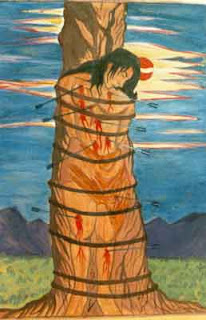
One day during 1741, the miscreant Thassang Lamas ambushed around the “Sirijunga Phukku”, captured Teyongshi Sirijunga, tied on a Yakpopmasing (Mahuwa tree Engelhardtia acerifolia) tree. They chocked by having the dirt of fowls stuffed down his throat and killed with poisonous arrows on the confluence of Kalej and Reshi Khola, Martam-Bermiok, West Sikkim. The deceased’s body was put in a leather bag and thrown in the Kalej Khola. Being so killed his soul took flight in the shape of a bird. The Lamas saw a white bird coming out of the bag containing the deceased’s body, which fled away towards the sky. By seeing that the Lamas believed that he was actually a great soul and an incarnate of King Sirijunga (Thotup Namgyal and Jeshang Dolma 1980).
After that, it is believed that the Thassang Lamas also killed some of the Teyongshi’s disciples and others fled away from Sikkim. One brave disciple of Teyongshi, Pegha clan was caught at Omchung village of West Sikkim and brought to Gyalshing. He was stretched naked; his body was wounded with sharp knife. Then common salt and chilly were put on the wounds for torture. Thus, he was tortured for seven days till he breathed his last on the spot where later on a long Mendang has been constructed, which is still exist.
All the ethnic group people – Bhutia, Lepcha and Limboo were familiar with all the three languages during that time and thus the Rabdentse administration headed by Rabden Sakpa Gyalpo that time banned reading and writing of Limboo script, Mundhum, Language and literature from that day. The Thassang Lamas roamed around the Limboo villages singing songs as follows:
“Wa le khumma wa-khoongi,
Phak le khumma phak-toongi,
Sirijunga yakthung sapla kejokpa papmenloo’
Hangle amset loo.”
(Fowls are tamed with fowl-cages, pigs are tamed with pig-yokes, Sirijunga a Limboo teacher should not be told to anybody and otherwise you may get a capital punishment from the King).
Singing the above songs, the miscreant Thassang Lamas used to roam around in the villages of West Sikkim. After this happened, most of the Limboos burnt away all the papers written on the Sirijunga script with them in their houses. Since then, Limboo language and literature in Sirijunga script remain disused in Sikkim for about 173 years when Lalsor Sendang from Athrai Nepal came to Thambong West Sikkim via Samandin in 1914 A.D. (Subba, P.S. 1982).
Thus, Teyongshi Sirijunga and some of his disciples were killed and some others fled away from Sikkim. Most of them fled away to Limbuwan area and one of the disciple was said to settle at Kankaibung Darjeeling District of West Bengal (Subba, B.B. 2002).
Teyongshi Sirijunga Phukku, Wadhan and the Box:
In the cave located at the confluence of Kalej and Reshi Khola where Teyongshi Sirijunga took shelter during the threat of his life is known as “SirijungaPhukku”. There is a white thick box-like structure seen from a distance. People believe that Teyongshi Sirijunga used to carry around the collection of Limboo manuscripts in a wooden Box. People believe that this is the same box he had kept on “SirijungaPhukku” before his assassination. The Box-like structure is still seen in the Cave. People believe that the box has been turned into a stone now. The Limboo people consider these places as a very secret place and are afraid of climbing to the cave. They worship at the base where a small platform has been made for that. On the right side of the cave there are three beautiful waterfalls in series of about 200 feet height altogether of Reshi Khola now known as “SirijungaWadhan” or “Sirijunga falls”. The middle one is having more height and is nearer to “SirijungaPhukku”.
The area around the “SirijungaPhukku” and the “SirijungaWadhan” has been a sacred place for the Limboos and they pay homage and worship. People from surrounding area still believe it as a spiritual guarded place and every year the Limboos of Sikkim, West Bengal, Bhutan and Nepal come to this place to pay their tribute to the great saint at the time of his birth aniversy. This place and the spot where he breathed his last are revered as one of the important pilgrimage centers by the Limboos.
Thus, it was only after the birth of Teyongshi Sirijunga the Limboos once again saw the light of the day. He was successful in rediscovering and reviving this lost script. The credit of bringing about mass awakening amongst Limboos entirely goes to this great soul.
It is important to mention Teyongshi Sirijunga’s advice to the Limboo Community on limboo language, which was as follows:
“Yakthung sapla yaomba ro
Hensigang sokma yaklo
Helle ani ahing loo
Ani helle aing loo
Yakthung sapla megegero
Yakthung suwang memegero.”
(Limboo language is a big thing, it is the life, we live with this, and we become famous with this. If limboo language disappears, the limboo community disappears).
His advice on Yuma religion to the Limboo Community was as follows:
“ Yuma Samyo yakthum sakthim re kusaap loo
Yuma sam do Iksading khambek ko TageraNingwaphuma roo
Yuma sewa tancho-yuncho chogumroo
Yuma Mundhum nu Khahunha septummoo
Yuma Samyo hinggrot ani yakthum Sakthimin hingloo
Yuma Samyo nu Sakthim hinggrot yakthum suwang hingloo”.
(Yuma religion is the root of Limboo culture and tradition. Yuma sam is the earthly goddess of TageraNingwaphum. Let us pray to Yuma sam morning and evening. Let us protect Yuma Mundhums and Khahuns. If Yuma religion is saved the Limboo culture and tradition is saved. If Yuma religion and Limboo culture and traditions are saved Limboo community will be saved).
The Great Awakening of the Limboo Community
The assassination of Teyongshi Sirijunga and some of his disciples, driving away of other disciples, and banning of Limboo script reading and writing in Sikkim since 1741 by the Sikkim Administration, has brought about a great awakening in the minds of the Limboo Community in Sikkim, other states of India and Nepal. The triggering effect of these events of third quarter of eighteenth century remained active under current for about 173 years till the political environment was favourable. Once the environment became favourable the active under current was reactivated in full swing in Sikkim, Kalimpong area of West Bengal, other parts of India, Burma and Nepal.
The triggering effect mentioned above had overall awakening of the Limboo community and could be described in three sectors of awakening viz:
a) The great awakening of Limboo Language and literature;
b) The great awakening of Yuma Religion; and
c) The great awakening of Limboo Culture.
a) The great awakening of Limboo Language and Literature:
Once Sikkim became British protectorate after the Treaty of Titalia in 1817 A.D., the political environment for the development of socio-religious and cultural traditions became favourable. However, in the absence of any literary person who can take a lead in the field of socio-religious and cultural traditions, the awakening remained dormant. It is only in 1914, when Lalshor Sendang (1840-1926) son of Hangbir of Athrai Nepal came to Thambong, West Sikkim and ignited the awakening especially the language and literature development in Sikkim and Kalimpong of West Bengal.
He has been instrumental for reviving Limboo language reading and writing in Sirijunga script once again in Sikkim and Kalimpong. He taught the Limboos including I.S.Chemjong of Kalimpong and Sikkim to read and write Sirijunga script and Yuma Samyo Khahuns. On his effort “Yakthung Hang Chumlung” the first limboo literary society was formed in Kalimpong in 1925. Thereafter, the society had taken a lead for limboo language and literature development. Later on I.S.Chemjong of the society had been instrumental for overall awakening of the entire Limboo community of Sikkim, other states of India and Nepal, resulting publication of first limboo language primary book known as “Tum Yakthung Ningwaphu Sapla” by Bajbir Tholong from Kolkata in 1928. Thus, the beginning of informal Limboo Language education started in India, Burma and Nepal in 1928. In due course of time a number of branches of “Yakthung Hang Chumlung” was established in India, Burma and Nepal. Lalsing Subba of Kalimpong established Jambok Memorial School in 1938 and marked the first Limboo Language School and the beginning of formal Limboo Language Education in the history of Limboo Language Development.
Influence of “Deo-nagari script” and Nepali language continued on the development of Sirijunga script, Limboo language and Limboo people. As a result, addition of 11 (eleven) consonant letters with complete “deo-nagarization” of Sirijunga script took place as seen in the primary book of Subedar Bajbir Tholong known as “Tum Yakthung Ningwaphu Sapla” that was published from Kolkata in 1928. Bajbir Tholong prepared this book in consultation with I.S.Chemjong when Chemjong was doing his I.A. study at Kolkata. The new consonants added on original Sirijunga Script in this book were as follows:
/g/ /gH/ /jH/
/yn/ /d/ /dH/
/b/ /bH/ /mrdis/
/tr/ /gyn/
With the same addition of script I.S.Chemjong, Man Bahadur Khamdhak and Padam Singh Subba (Muringla) also published “TumYakthungNingwaphuSapla” in 1951 from Gangtok, Sikkim and distributed throughout the Limboo populated area of India, Burma and Nepal. However, some of the glyphs of the letters of the script are totally different from the original Teyongshi’s script.
The Limboo language primary book published by Tholong in 1928 as well as Chemjong, Khamdhak and Subba in 1951 had 31 big and 11 small letters with addition of 11 big letters on Teyongshi Sirijunga Script. P.S.Subba (Muringla) pointed out that the basic reason for addition of letters was due to the difference in approach in solving the peculiar characteristics of the syllable when two words are joined together to form one word. For instance, the word “kak” becomes “gak” in the combined single independent word “singgok”. Like-wise the word “thack” becomes “dhak” in the word “lungdhak”, and “chama” becomes “jama” in the word “chajama”. The two Sirijungas may have proposed to use the same letters for these sounds and it was left to the reader to pronounce the syllable as per the situation in the word. Whereas, Bajbir Tholong, I.S.Chemjong, M.B.Khamdhak, P.S.Subba and his associates added more letters to represent the change of sounds on the influence of the Nepali Language – the lingua franca of the region. It is also evident that not a single word begins with these letters in the limboo language vocabulary. Therefore, it is logical to assume that Sirijungas may have thought them unnecessary (Subba,P.S. 1997). This is also evident from the text of “Yakthung Mundhum Sapla” of Teyongshi Sirijunga where the letters without vowel signs are pronounced as “A-akaranta” while the letters with vowel signs are pronounced “Akaranta”.
The language experts have found that the process of development of phonetics starts at the later stage of the language development. According to S. Tomba Singh (1984:12p) the allophones of /g/, /ja/, /da/, /ba/ and /ra/ development in the Manipuri language took place in the 12th century only. Since, the parent of Manipuri and Limboo languages being the same, the phonetic development of allophone graphemes (sparsa-ghosh) letters /ga/, /gha/, /ba/, /bha/, /da/ etc. in the Limboo language might have developed during the early 19th century only (Batsgopal, 1997).
I.S.Chemjong published “Kirant Sahitya Ko Itihas” in 1955, “Tum Yakthung Ningwaphu Sapla” with conjoint letters in 1961, “Limboo –Nepali-English Dictionary”, “Kirant Folklore” and “Kirant Mundhum” in 1961, “Kirant Mundhum Khahun” in 1965, “Kirant History and Culture” in 1967, “Kirant Darshan Ko Saransh” in 1969 and “Bijaypur Ko Itihas” in 1974 (Subba, J.R. 2002). The Chogyal Tashi Namgyal (1893-1963) appointed Indra Prasad Limboo (Sawaden) of Bandukey in the Council of Ministers of Sikkim Darwar in 1958. B.B.Subba (Muringla) was appointed as assistant Limboo Textbook Writer on honorarium basis on 8th December 1975, which was confirmed on 24th April 1976. Chandra Mangyung, a Language teacher appointed in 1972 was also deputed to assist B.B.Subba in the work of Textbook writing for sometime in the very beginning of Textbook writing work. But he left for teaching after a few months. As a result the Education Department, Government of Sikkim published Textbooks for class I and II prepared by B.B.Subba (Muringla) in 1976. Out of the above 11 consonant letters added by Tholong, Chemjong, Khamdhak and Subba and his associates in the Sirijunga script, B.B.Subba (Muringla) re-devised and retained only five consonant letters. In this re-devising and retaining process of Sirijunga script, he discarded all other consonant letters, which did not fit in the Limboo language phonetics. These five consonant letters retained by B.B.Subba (Muringla) are as follows:
u/g/ P/gH/ a/b/ e/bH/ b/d/
B.B.Subba (Muringla) not only re-devised the “Sirijunga script” but also introduced the current writing system of Limboo language in 1975-76. On the basis of re-devised Sirijunga script of B.B.Subba (Muringla) S.M.Limboo established letter head Printing Press “Subba Prakashan” in 1982 and First award of Printing and Designing Sirijunga Script was awarded to S.M.Limboo in 1984. Mohan Prasad Subba (Phurumpho) was also associated in the establishment of the Printing Press. Based on this current Sirijunga script, Karun Thapa and his associates developed computer “Sirijunga fonts” in 1995. B.B.Subba (Muringla), Kumar Subba, J.R.Subba, Y.P.Subba, Yhang Laoti and Delendra Subba further improved the Sirijunga fonts in 2000 and 2004.
The current Sirijunga fonts in the Unicode have the following characteristics:
i) Vowels (Kubung-sok):
c// cf/a/ cl/i/ c’/u/ c]/e/
c}/ai/ cf]/o/ cf}/au/ c[/E/
ii) Vowel signs (Sok-nam):
f l ‘ ] } f] f} [
The Limboo vowel system has nine phonetically distinct timbers, (, a, i, u, e, ai, o, au, E). The vowel // functions as the inherent vowel in the current limboo script. To indicate a syllable with a vowel other than the inherent vowel, a vowel sign is added over, under, or to the right of the initial consonants. Although, the vowel // is the inherent vowel, the Limboo script has a combining vowel sign / {/ (ticha or nara) that was optionally being used to represent it. However, this sign obtained from Tibetan script was in use when the script was “A-akaranta” during Sirijungas time. Since, now the current Sirijunga script is in “Akaranta”, using this sign is considered redundant.
A vowel-carrier character, c// together with the appropriate vowel sign, represents syllable-initial vowels.
iii) Consonants (Kudhok-sok):
s/k/, v/kH/, u/g/, i/N/, r/c/,
p/C/, h/j/, g/n/, t/t/, y/tH/,b/d/,
w/dH/, k/p/, m/pH/, a/b/,
e/bH/, d/m/, o/y/, F/r/, n/l/,
j/w/, z/sh/, ;/s/, x/h/, P/gH/.
iv) Half sounding letters (chuk-sok):
S/k/, I/N/, G/n/, T/t/,
K/p/, U/r/, N/l/
Half-sounding small consonant letters are independent forms as word final consonants and pronounced without a following vowel.
v) Full sounding sub-conjoint letters-clusters (Aktum-sok):
O/y/, q/tr/, J/w/
Full-sounding sub-joint consonants are joined to the bottom of the consonant letters, extending to the right to indicate “medials” in syllable-initial consonant clusters. There are only three sub-joint consonants in Sirijunga script.
vi) Phonetic symbols (Kusek-sok):
Glotal stop (Mukphreng): /C /
Vowel length (Kemphreng): / M/
Vowel length is phonetically distinctive in open syllables, indicated by this phonetic symbol. In close syllables Kemphreng does not indicate vowel length. The syllable-final consonant is written as a full form, marked by /sai/ in the following syllable-final consonant. This sign thus marks vowel length, in addition to functioning as virama by suppressing the inherent vowel of the syllable-final consonant.
Coda consonant (Sai) : / -/
Sai is based on the Indic virama, but it indicates the length of the preceding vowel in addition to killing the inherent vowel of consonants functioning as syllable finals. It cannot be used as an Indic virama.
vii) Punctuation (Tokpey) :
Full stop (tok) : /./
Comma (Chuk-tok) : /V/
Semicolan (Chuk-phreng-tok) : /B/
Colan (Phreng-tok) : /`/
Ellipses (Sophaa) : /VVV/
Question mark (Sendobey) : /Z/
Exclamation (Oksebi) : /X/
Quotation mark (Pa-kheng) : /Y Y/ /” “/
Hyphen (Loo-be) : /_/
viii) Digits (Khanin) :
0 1 2 3 4 5 6 7 8 9
Limboo digits have distinctive forms and are assigned code points because limboo and deo-nagari numbers are often used in the same documents.
The Limboo or Sirijunga script is a Brahmic script of Gupta Period (4th to 8th century) primarily used to write the Limboo language. Limboo is a Tibeto-Burman language of the East Himalayan group, spoken by about 4,00,000 persons mainly in Eastern Nepal, Sikkim, West Bengal, Assam and other Indian States. Its close relatives are the languages of the East Himalayish or Kiranti group in the Eastern Himalayas. Limboo was recognized as an official language in Sikkim in 1981 (Sikkim Government Gazettee No.17 dated 06.03.1981).
The oldest known writing in the Limboo script, most of which are held in the Indian Office Library London, were collected in Darjeeling district of West Bengal in the 1850s by Sir B.H.Hodgson (1819-to 1943). These collections include Volume 74, 78, 79, 80, 84, 85, 86, 87 and 89. These collections includes, Teyongshi Sirijunga’s “YakthungMundhumSapla” wrote when he was at Martam, West Sikkim in 1934-41.
Following this development, B.B.Subba (Muringla) and his associates in 1975-76 onwards developed the current Sirijunga script. The encoding in the Unicode Standard supports three versions of the Sirijunga script, Viz:
i) the eighteenth-century script, found in manuscript documents held in the Indian Office Library, London inclusive of “Yakthung Mundhum Sapla” of Teyongshi Sirijunga, contributed mostly by the Teyongshi Sirijunga and his associates;
ii) the early modern scripts, used in a few, mainly mimeographed, publications between 1914 and 1975, mainly contributed by Lalshor Sendang, I.S.Chemjong, Bajbir Tholong, Phalgunanda Lingden, R.B.Phago, Man Bahadur Khamdhak, Padam SinghSubba (Aptan), Jashang Maden, Prof. R.K.Sprigg; and
iii) the current script being used in Sikkim and Nepal, developed mainly by B.B.Subba (Muringla) only in Sikkim during 1975-76 onwards. The script is now being used in Sikkim and other states of India, and Nepal right from Pre-primary Government Schools since 1976 up to the University Level of Education since 2000.
The great awakening had a tremendous triggering effect in Sikkim. The Chogyal Palden Thondup Namgyal (1923-82) approved Limboo language study as an optional subject in the Government School of Sikkim up to class II in 1968 as optional subject. This was the foundation of Limboo language study initiated by the Government and is considered as the greatest event in the history of limboo language development. Consequently, the first Limboo language teacher Itcha Purna Das Limboo of Samdong West Sikkim was appointed on 21st March 1968. In the process, seven more Limboo Language Teachers were appointed in the Department of Education, Government of Sikkim in the chronology such as Harka Bir Limboo on 15th February 1971, Tejman Limboo on 26th June 1971, Jharman Limboo on 26th June 1972, Chandra Mangyung, Lall Bahadur Limboo, Karna Singh Limboo and Man Bahadur Limboo on 24th April 1972. Thus by 1972, eight limboo language teachers were appointed in the Government Schools of Sikkim. The Primary Textbook of I.S.Chemjong, Man Bahadur Khamdhak and Padam Singh Subba (Apatan) “Tum YakthungNingwaphuSapla” was being used as textbook till 1975. However, the development of Limboo Language education was not satisfactory till the end of 1975 as it was being taught only as optional subject in the Government Schools of Sikkim.
The greatest triggering effect of Teyongshi Sirijunga on Limboo language and literature took place after the national integration of Sikkim into the Indian Union on 16th May 1975. The Government of Sikkim lead by L.D.Kazi with K.B.Limboo as Minister Representative of the Limboo Community of Sikkim approved formal education of limboo language study in the Government Schools of Sikkim up to class V in 1975. This marked the beginning of rapid limboo language development in Sikkim. B.B.Subba (Muringla) was appointed as Assistant Limboo Textbook Writer on honorarium basis on 8th December 1975, which was confirmed as regular appointee in the Department of Education, Government of Sikkim on 24th April 1976. The Education Department, Government of Sikkim published Limboo Textbooks for class I & II prepared by B.B.Subba (Muringla) and Chandra Mangyung by re-devising theTeyongshi, Tholong, Chemjong and his associate’s “Sirijunga script”. Padam Singh Subba (Apatan) and Man Bahadur Khamdhak were also associated during the preparation of the above textbooks. They also introduced modern writing system of Limboo language in Sirijunga script. By the end of 1979, the Education Department, Government of Sikkim completed the publication of Limboo Textbooks up to class V standard. With the promotion of B.B.Subba as Deputy Director, Mohan Prasad Subba (Phurumpho) was appointed as Assistant Textbook Writer of the Limboo language on 7th May 1980 and he continued up to 1990. The above two Limboo Textbook Writers enormously contributed not only on Textbook writing but also on the current Sirijunga script development and introducing the current limboo language writing system.
The rapid pace of Limboo language and literature development could be possible due to the explicit support of the successive State Governments of L.D.Kazi (1975-79), N.B.Bhandari (1979-94) who declared Limboo as one of the Official languages in 1981, and Pawan Kumar Chamling (1994, 2004, 2008- …) on the one hand and presence of dedicated limboo intellectuals like Man Bahadur Khamdhak, Padam Singh Subba (Apatan), B.B.Subba (Muringla), Chandra Mangyung, Mohan Prasad Subba (Phurumpho) and numerous Limboo Language School teachers in Sikkim.
In the course of Limboo language development and education, Limboo language was introduced in Central Board of Secondary Education (CBSE), New Delhi in 1983 with the sole effort of Pahal Man Subba, M.P. (1980-85). The first batch of students holding Senior Secondary School Certificate with Limboo language passed out in 1986 from the Government Schools of Sikkim.
By 2004, there were 219 Primary teachers, 43 Graduate teachers and 8 Post-Graduate teachers (total 270 Nos.) in 24 Government Senior Secondary Schools, 38 Government Secondary Schools, 38 Government Junior High Schools and 96 Government Primary Schools in Sikkim. There were 627 Pre-Primary, 2,063 Primary, 1,217 Secondary, 75 Senior Secondary School students (total 3,982 Nos), studding Limboo language in the schools of Sikkim.
North Bengal University granted limboo language in the Under-graduate study in 2000 and the first batch of graduate students with limboo language passed out from the Government Degree Colleges of Tadong and Namchi in 2004. Sikkim University came in existence in existence in 2007. Limboo language study course curriculum revised and made elective subject at par with Nepali Language in 2008. The first batch of B.A. with elective subject of Limboo Language came out from the university in 2011. Now there is a proposal to start B.A. (Hons.) from the academic session 2012-13, and M.A. from the academic session 2013-14.
“SukhimYakthungSapsokSongjumbho” an apex organization of Limboo community of Sikkim was established in 1979. Thereafter a number of Limboo societies were established such as “AkhilSukhimYakthungChumlung” in 1980; “Namdha Sukhim Yakthung Saplonchumbho” in 1980; “Sukhim Yakthung Nichamsa Chumbho” in 1983; “Sukhim Limboo Teacher’s Association” in 1989; “Sukhim Limboo Youth Association” in 1994; and “Temen Yakthung Ma Chumbho” in 2003. All India Radio Gangtok programme in Limboo was started in Sikkim in 1983.
With the establishment of “Namdha Sukhim Yakthung Saplonchumbho” in 1980, annually I.S.Chemjong’s Birth Anniversary on the 1st January is celebrated in Sikkim. In the first day, literary competitions of poem, prose, essays, etc. are organized, the best ones are awarded, certificate of appreciation are provided. On the following day on 1st January Limboo intellectuals are invited for discussion and address on Limboo language and literature development. Annually, the literary works thus collected are compiled and published as annual Journal known as “Imetna Sung”. A Silver Jubilee Function of the Journal was celebrated at Gyalshing in 2004. The Limboo language has been enriched with language and literature works thus collected in Sikkim since 1980 (Subba, J.R.2002).
However, Limboo language development in Nepal started very late. In 1930, Major General Mrigendra Samsher Janga Bahadur Rana became the Director of Public Instruction. He passed an order that now onwards the Nepal Kirantis can read and write Kiranti scripts. Following this decision, Guru Phalgu Nanda Lingden (1885-1948), I.S.Chemjong (1904-1976), Lalshor Sendang, Kaziman Kandangwa and many others started creating limboo language awareness in 1931-32 onwards. However the pace of development was very slow. In 1989, “Kirant Yakthung Chumlung” was established in Nepal and has started work on limboo language and literature development. Till Bikram Nembang is the man behind this and the organization has started contribution on various aspects of development. Others who are associated to this organization are Chaitanya Subba, Yahang Laoti, Manjul Kumar Yakthungba, Arjun and others. Radio news broadcasting programme in Nepal was started in 1994; monthly news paper “Tanchoppa” was started in 1995; Sirijunga computer font was developed in 1975 from the Sirijunga script obtained from Sikkim; primary level limboo language study as optional subject in the schools of Nepal was started in 1996; and “Limboo-Nepali-English Dictionary” published in 2002.
Thus the great awakening of Limboo language and literature development triggered by the assassination of Teyongshi Sirijunga raised the limboo language from 6th stage of Fishman’s GIDS (Graded Intergenerational Disruption scale) rating in 1974 to 4bth stage of GIDS rating in 2004, and making inroads into stages 3-1. How Limboo language came to this position in Sikkim in just last 29 years is clearly because of the explicit support of the successive state governments and presence of dedicated limboo intellectuals in Sikkim.
However, the literary status of the Limboo language in Nepal is still hovering in the 5th stage of GIDS. In Nepal the language needs development support of the Government.
b) The great awakening of Yuma Religion:
As in the case of limboo language and literature awakening, the great awakening of inherent Yuma Religion also took place after the assassination of Teyongshi Sirijunga. The sermons and teachings of Yuma Samyo, Mundhums and Khahuns delivered by Teyongshi Sirijunga during his stay at Martam, Hee and Bermiok, West Sikkim triggered the spread of Yuma religion. Along with limboo language reading and writing in Sirijunga script, he also taught about Yuma Mundhum and Yuma Khahuns (Teachings). With the arrival of Lalshor Sendang in 1914 from Nepal and the political environment became favourable, the under current of Yuma Religion awakening accelerated in Sikkim. However, the awakening and development pace of Yuma Religion was slower as compared to language and literature in Sikkim.
If the history of Yuma Religion is observed, the inherent belief system of Yuma Samyo of the limboo community could not be suppressed either by 332 years rule of Buddhism or by the spread of Hinduism under the aggressive campaign of Gorkha rulers. Teyongshi taught the Yuma Samyo teachings, morals, values and ideals of the Limboo people to continue the inherent belief and philosophy system that would allow the people to behave responsible and still retain the essence of Limboo’s history and cultural identity.
The five broad outline of the basic concept of inherent Yuma Samyo philosophy and teachings that has been re-discovered and re-disseminated by Teyongshi Sirijunga are as under : 1. How to behave as a human being?
- One should be kind enough towards all living creatures.
- Should love fellow beings.
- Should feel grateful to one’s saviors.
- Should never envy and jealousy to others.
- Should revere Mangs as parents.
- Should act with immaculate heart and mind.
- Should never practice theft, plundering, abetment, quarreling. fighting, murder, lying, slandering and backbiting.
- Should not be arrogant and involve in debauch ring.
- Should look after orphans and poor and be just towards.
- Should never involve in incest and wicked sinful acts.
- And one should lead a simple and sincere life to remain happy and prosperous throughout one’s life.
2. Knowledge, Intelligence and Wisdom are Gods:
- Works performed by good conscience will be fruitful and lasting.
- Stupidity leads to misery and ruin.
- Distress and difficulties suddenly fall upon wicked persons, and death and disease attack them.
- Knowledge, Intelligence and Wisdom are the only means to reform human beings, improve natural surroundings, and enlighten and civilize the people.
- Lack of perseverance for attainment of knowledge, intelligence and wisdom leads to paucity of knowledge and good conscience.
- Lack of knowledge and good conscience produces arrogance, conceit, selfishness, which leads to the loss of money, power, prestige and health.
- And, loss of knowledge and conscience eventually leads to darkness and destruction.
3. Yuma Sam is a Light:
- Yuma sam is a light, a source of power or energy and a source of creation.
- Only the bright soul causes light.
- Light and darkness never co-exist. When the light comes in the form of understanding, communicating, perceiving, listening, doing justice and performing efficiently, – the theft, spoliation, quarreling, war, evil thinking and actions will vanish inevitably as the source the darkness, disappear.
- Yuma love her creation, nourish them, protect and preserve from evil spirits, enemies and annihilation.
- Those who have this understanding, never deviate from the path of devotion to Yuma and discharge their day-to-day responsibilities sincerely and properly.
4. Clean Mind is the essence of Life:
- Unsullied mind always remains free of trepidations.
- One should save others to save oneself, raise others to raise one.
- One should enjoy it over coming hindering, lust, anger and dejection.
- One should make it fresh through self-control, austerity, purity, uprightness, forbearance, generosity, vigour and heroism.
5. Vicious acts are sin and sin is more powerful:
· The only way to get rid of sin is the pious acts.
· Retribution of such acts is meted out to the evil doors by the authority in lifetime and by God after life.
· Everything is evanescent including prosperity, wealth, prestige and power. One should take this fact into consideration while in actions.
Any socio-religious and cultural tradition cannot be sustained unless there is a continuous source of inspiration from its institution. Religion is the root of a culture, tradition and civilization. A civilization or a culture could be sustained only through its religious institution. The Hindus, Buddhist and Christians have realized this fact centuries ago. These religions are sustained by the continuous flow of ideas and inspirations from these institutions namely Hindu temples, Buddhist monasteries and Christian churches respectively. The Limboo community has realized this fact very late. Now, there is an active process of institutionalization. It was only in 1983, a Mangkhim was constructed at Mangshila, North Sikkim.
Sukhim Yakthung Sapsok Songjumbho, an apex organization of the Limboo Community of Sikkim, desired to acknowledge the sacrifice of the great son of the Limboo community by constructing a Mangkhim near the Big Flat Stone where Teyongshi Sirijunga used to teach Limboo language reading and writing and deliver Yuma Samyo sermons to the Limboos so as to remind the people of his sacrifice. The desired was expressed to the Chief Minister Dr. Pawan Kumar Chamling, Government of Sikkim. The idea was welcome by him and with the Government’s financial assistance of Rs.10.00 lakhs a beautiful Mangkhim has been constructed at the site of the Big Flat Stone, at Martam, West Sikkim. Dr. Pawan Kumar Chamling inaugurated the Mangkhim on the Teyongshi Sirijunga Birth Anniversary day function on 3rd December 1998. The Birth Anniversary is celebrated every year in his honour. The road from Bermiok to Legship passing through the Mangkhim has also been named as Mahatma Sirijunga Road in his honour.
Every year, the Birth Anniversary of this great soul is celebrated with great pomp at Martam, West Sikkim on this spot since 1996 by the Limboos of Sikkim. The State Government has declared Government Holiday to facilitate participation of the Birth Anniversary since 1998. The apex organization “Sukhim Yakthung Sapsok Songjumbho” is looking after the entire affairs of Birth Anniversary Celebration of Martam, West Sikkim with its local committee formed under the Presidentship of Shri K.B.Limboo of Martam West Sikkim at present.
After this a number of Mangkhims were constructed in Sikkim and some of them are under construction. Now, there are total of 11 Mangkhims in Sikkim. They are Mangshila in North (1993), Hee (1997), Martam (1998), Soreng , Yongthong , Thambong , Tumlong, Darap in the West, Aho , Assam Linzey , in the East, and Rabitar (2002) in South District of Sikkim. There is a proposal to establish a Limboo Cultural study Centre and construction of Teyongshi Sirijunga Statue at Hee-Patal, West Sikkim.
I.S.Chemjong started the process of collection and documentation of Yuma Samyo Mundhums. He published “Kirant Mundhum” in 1961 and “Kirant Mundhum Khahun” in 1965. Following this, Bairagi Kainla published “Sappok Chomen Mundhum” in 2048 B.S., “Nahen Mundhum” in 2051 B.S., “Samsogha Mundhum” in 2051 B.S., and “Tongsing Tokma Mundhum” in 2052 B.S. from Nepal. J.R.Subba has contributed a lot on understanding of Yuma Samyo to the outside world when he published “The Philosophy and Teachings of Yuma Samyo” in 1998. He collected, compiled and published “Yakthung re Tendham Mekkhim Mundhum” in 1998; “Yakthung re Phungsok Timma Mundhum” in 1999; “Sumsemba Yagrangsing Tongsing Tokma Mundhum” in 2001; “Mujoklung Khajoklung Mundhum” in 2003; “Simering Mundhum Part II” in 2003; “The Limboos of the Eastern Himalayas with Special reference to Sikkim” in 1999; and “Concept of Life after Life and Funeral Practices in YumaSamyo Tradition” in 2004, History, culture and Customs of Sikkim in 2008, Mythology of the people of Sikkim in 2009 and Yumadharma ko Darshanic Bishleshan in 2011.
All the above Yuma Samyo developments could be possible only due to the triggering effect of assassination of Teyongshi Sirijunga at Martam, West Sikkim.
d) The Great Awakening of Limboo Culture:
The third great awakening of the Limboos in Sikkim took place on Limboo Culture. The triggering effect of Teyongshi Sirijunga on Limboo culture was the result of establishment of “Sirijunga Yakthung Sakthim Phonjumbho” a social organization dedicated to the Limboo Cultural Development in 23rd August 1980 at Tharpu, West Sikkim. The organization has contributed a lot on the cultural development of all the communities of Sikkim including the Limboo. Every year on its foundation day, cultural programmes of all the communities of Sikkim are staged with great pomp; cultural competitions are organized and the best ones are awarded for encouragement.
With the financial assistance of the State Government to a tune of Rs.44.19 lakh a beautiful cultural complex with facilities of a practicing hall, library room, exhibition hall, stage for dancing, caretaker’s quarter etc. has been constructed at Tharpu. Shri Pawan Kumar Chamling, Hon’ble Chief Minister, Government of Sikkim, in the 23rd Annual Day function of the Cultural Centre on 23rd August 2003, inaugurated the Cultural Complex, Tharpu, West Sikkim, with great pomp.
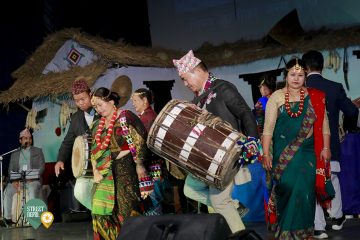
The Limboo artists from this center have participated in a number of cultural occasions both within and outside Sikkim. To mention a few, the artists participated in the inaugural ceremony of Gangtok Radio Station in 1983; participated in National Cultural Camps; independence and republic day celebrations; Maghey Mela and Cultural Mela celebrations; tourist festivals; Eastern Zonal Cultural Centre, programmes and so on.
The most popular and attractive items are Ke Lang (Chabrung dance), Yia Lang (Dhan Nach), Tamkey Lang (Tamkey Dance), Palam and Hakpare Samloo, Khyali etc.
This could be possible only because of the triggering effect of the sacrifice made by Teyongshi Sirijunga Singthebe, his disciples and presence of dedicated Limboo intellectuals in Sikkim. The most important factor to translate this triggering effect was the explicit support of the successive Governments of Sikkim.
Selected References:
Acharya, Baburam (1968). Shri Panch Bara Maharajdhiraj Prithivi Narayan Saha Ko Sangchipta Jiwan. Kathmandu.
Bell Charles (1928). The people of Tibet. Motilall Banerashidas, Pub. New Delhi.
Chemjong, I.S. (1948). Kirant Itihas. Pub. AIKC. Darjeeling.
(1966). History and Culture of Kirant People. Panchthar.
(1970). Kirant Primary Book. Darjeeling.
(1975). Kirant Sahityako Itihas. Kathmandu. Limbuwan Pratinidhi Mandal.
Hammerton, Jhon (1979). Early races of Mankind. Vol.I.
Hudgson, Brain H. (1846). Hodgson’s Manuscripts.
Mabohang, P.B. &
Dhungyal, B.N. (1855). Sangchipta Nepal Itihas. Latitpur, KPTAK.
Namgyal, Thotup &
Jeshang, Dolma (1980). History of Sikkim. Translated by Lama Dawa Kazi Sandup, M.S.
Pradhan, Shiv Kumar (1985, 1995). Limbuwan ko Itihasik Adhyan. Kirant Prakashan, Kathmandu.
Risley, H.H. (1894). The Gazetteer of Sikkim. A Government of Sikkim Pub.
Sing, S Tomba (1984). Byakaranic Kotika Adhyan. Gyan Bharati, 4/14 Rupnagar.
Stiller, (1973). The rise of the House of Gorkha. p 281.
Subba, B.B. (1998). Sirijunga Teyongshi – ak chinari. Ajambari Pub. Bermiok.
Subba, B.B. (2004). About Sirijunga Teyongshi. Unpublished.
Subba, C. (1995). The Culture and Religion of Limbu, Kathmandu, Nepal.
Subba, Padam Singh et. al. (2050 B.S.). Limboo Bhasa Tetha Sahitya Vichar Gosthi. Nepal Academy, Kathmandu.
Subba, P.S. (1997). Invention of the Sirijunga Script. Souvnir: Birth Anniversary of Teyongshi Sirijunga.
(1982). Sodhungenba Lalshor SendangIsaba. Niwa Inghong: pp21-27.
Subba, J.R. (1998). The Philosophy and Teachings of Yuma Samyo. SYMS Pub. Gangtok, Sikkim.
Subba, J.R. (1999). The Limboos of the Eastern Himalayas with special reference to Sikkim. SYMS Pub. Gangtok, Sikkim.
(2002). History and Development of Limboo Language. Syms Pub. Gangtok, Sikkim.
(2004). Concept of Life After Life and Funeral Practices in Yuma Samyo Tradition. SYMS Pub. Gangtok, Sikkim.
Subba, M.P. (1997). Limboo Literature in Sikkim: at a glance. Souvnir, Birth Anniversary of Teyongshi Sirijunga.
Tholong, Bajbir (1928). Tum Yakthung Ningwaphu Sapla. Kolkata.
Yakthungchum, R.B. (1998). Teyongshi Sirijunga Ko Sangchipta Parichaya. SYSS Pub. Gangtok, Sikkim.